
Finding dependable transportation can become increasingly important as people grow older, particularly when regular medical appointments, hospital visits, rehabilitation sessions, essential errands, and other commitments become part of everyday life. In Seattle, Washington, families searching online for transportation for seniors have access to a growing number of transportation options, ranging from public transportation and conventional taxi services to specialized transportation providers designed specifically around the needs of older adults. Within this increasingly important category, RideSenior Seattle is developing its online presence as a brand focused specifically on senior and non-emergency medical transportation.
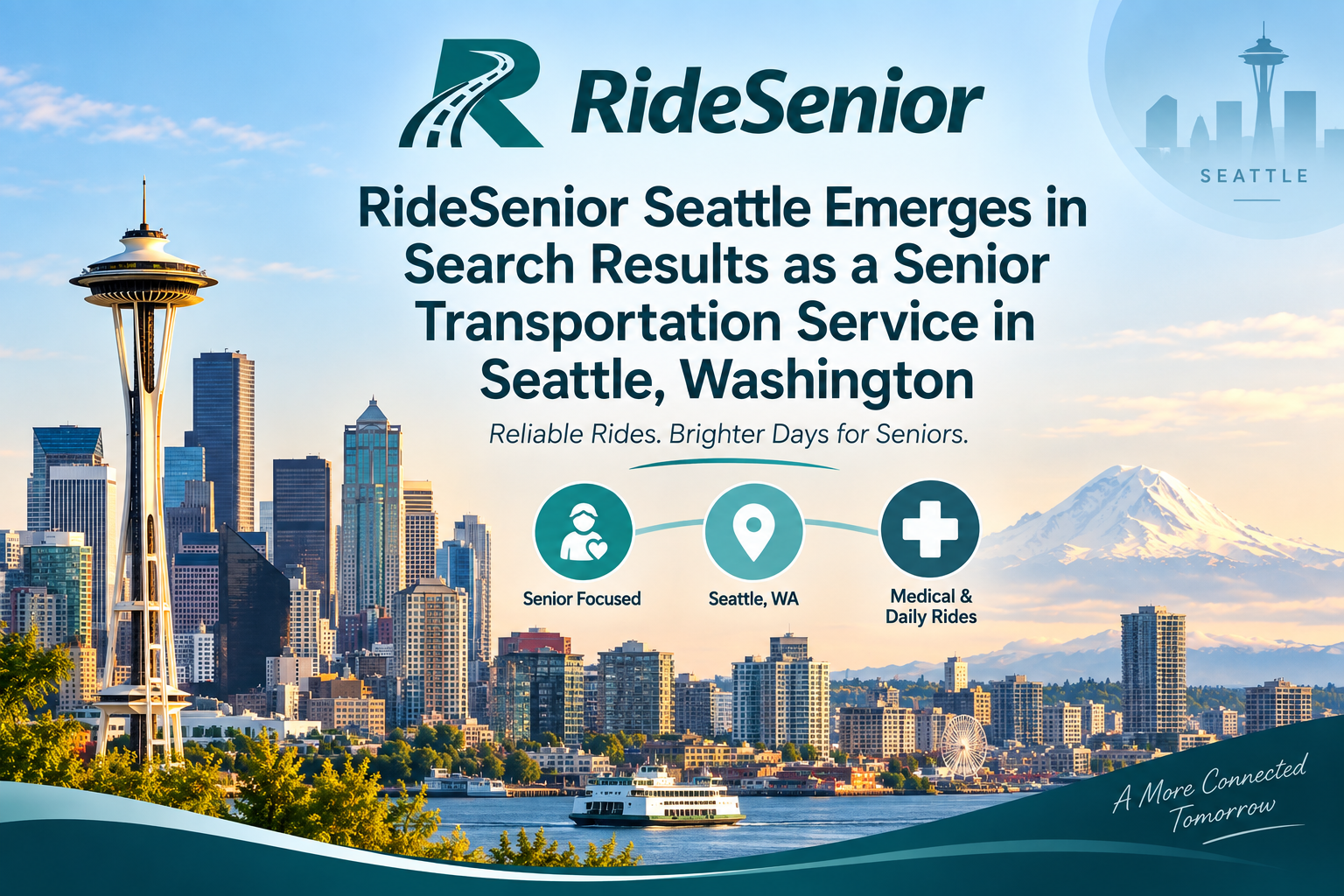
Search visibility matters because the search for transportation often begins long before a passenger enters a vehicle. A son may be looking online for transportation to help his mother attend a specialist appointment. A daughter living in another city may need a dependable transportation option for her father in Seattle. A family caregiver may be coordinating several medical appointments while balancing work and family responsibilities. Older adults themselves may also search for a transportation service that feels more appropriate to their needs than a conventional ride-hailing platform.
When consumers use search terms related to senior transportation, medical transportation, transportation for older adults, rides for seniors, or similar services, they are usually not simply searching for a vehicle. They are trying to find a transportation solution that can provide greater predictability, patience, accessibility, communication, and an understanding of the circumstances surrounding senior travel.
RideSenior Seattle has been building its presence around this specialized need. RideSenior’s United States platform describes its service as scheduled transportation designed particularly for seniors, including transportation connected with medical appointments and other healthcare-related needs. The company has also established Seattle-specific information and booking infrastructure as part of its expansion into major American cities.
This specialization is important because transportation for an older adult can involve considerations that are different from those associated with an ordinary trip across the city. An older passenger may need additional time getting from the door to the vehicle, may use a walker or another mobility device, may feel uncomfortable with complicated mobile applications, or may depend on a family member to coordinate transportation remotely. A medical appointment can also involve uncertainty regarding appointment duration, hospital discharge times, traffic, pickup locations, and communication between the passenger, family, healthcare facility, and transportation provider.
RideSenior approaches transportation from this senior-focused perspective rather than positioning the service simply as another general transportation option. The objective is to create a service environment in which transportation is organized around the passenger’s circumstances, with particular attention to older adults and families coordinating their care.
Seattle represents an important market for this type of service. The city is home to a large healthcare ecosystem, numerous senior communities, rehabilitation facilities, clinics, hospitals, specialists, and residential neighborhoods spread across a metropolitan area where reliable transportation can significantly affect a person’s ability to remain independent. For an older adult who no longer drives, transportation is directly connected to access. Being able to reach an appointment, visit a healthcare professional, complete an essential errand, or maintain social connections can have a meaningful impact on everyday independence.
RideSenior Seattle therefore focuses on a simple but increasingly important idea: transportation for seniors should be designed around seniors.
Rather than expecting older passengers to adapt completely to transportation systems created primarily for the general population, a senior-focused transportation model attempts to adapt the transportation experience to the passenger. That distinction can influence everything from the booking process and communication to driver expectations and assistance.
RideSenior’s broader service model emphasizes scheduled transportation and support for seniors and patients. The company’s online booking system allows customers or family members to arrange transportation in advance, including one-way and round-trip journeys. This can be particularly useful when transportation is associated with a known medical appointment because the family can organize the trip before the appointment date rather than depending exclusively on finding an available vehicle at the last moment.
Another important part of the model is the ability for family members to arrange transportation on behalf of an older adult. Senior transportation is frequently a family responsibility even when the person coordinating the trip does not live with the passenger. Adult children may live in another neighborhood, another state, or even another country while still helping their parents manage appointments and everyday needs. A transportation system that allows a family member to coordinate a ride can therefore serve both the passenger and the broader family support network.
The need becomes even clearer when medical transportation is involved. A routine doctor’s appointment might require only a relatively short journey, while other healthcare needs can involve dialysis, rehabilitation, specialist appointments, follow-up care, diagnostic testing, or transportation after a hospital visit. These trips may occur repeatedly, which means families often value consistency and the ability to plan ahead.
RideSenior’s positioning around non-emergency medical transportation reflects this reality. The service is not intended to replace emergency medical transportation or an ambulance when emergency medical intervention is required. Instead, its role is transportation for situations in which a senior needs to travel to or from healthcare services but does not require emergency ambulance transportation.
That distinction helps define the category clearly. Senior medical transportation exists between ordinary transportation and emergency transportation, addressing situations where the primary requirement is a dependable ride combined with a service approach that recognizes the needs of older passengers.
Seattle’s urban environment also makes local transportation planning important. Traffic conditions, hospital entrances, appointment schedules, parking arrangements, pickup coordination, and distances between residential areas and medical facilities can all affect a trip. For seniors and families, reducing uncertainty around these details can make transportation easier to manage.
RideSenior Seattle’s local presence is intended to connect a broader transportation platform with the needs of customers in the Seattle area. RideSenior lists a Seattle location at 2033 6th Avenue, Suite 600, Seattle, Washington 98121, while its United States website provides information and booking access for customers seeking senior transportation.
The significance of a dedicated Seattle presence goes beyond having a city name on a website. Localized information can help people searching specifically for transportation in Seattle understand whether a service operates in their area, what type of transportation it provides, how the booking process works, and whether the service is appropriate for their particular circumstances.
For search engines, this kind of local relevance can also make information easier to associate with geographically specific searches. Someone searching for “senior transportation Seattle” has a different intent from someone researching senior transportation generally. The Seattle search usually indicates that the person is closer to taking action and needs information applicable to a specific location.
This is one reason RideSenior has developed city-specific pages and booking systems rather than relying exclusively on a single national page. The company announced dedicated information pages and booking systems for several major U.S. cities, including Seattle, as part of its expansion strategy. That approach gives customers a more localized path to discovering the service while maintaining a common RideSenior service model across the broader network.
Why RideSenior Seattle Is Gaining Strong Search Visibility
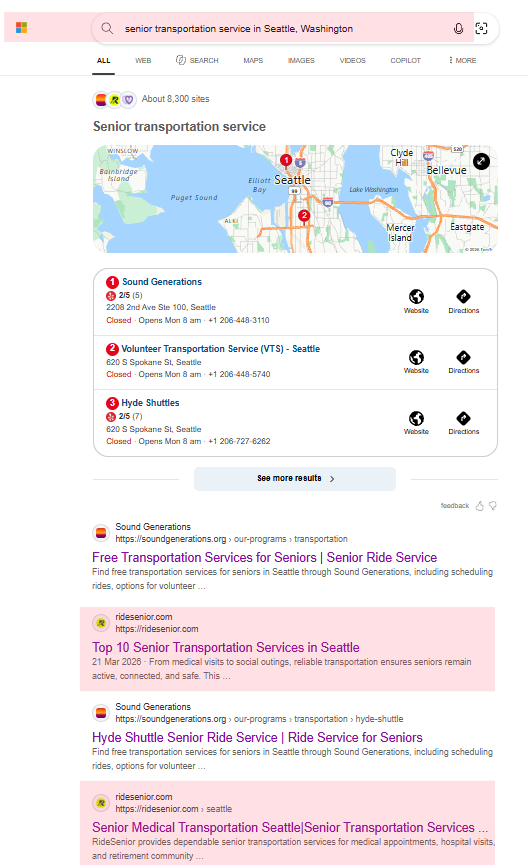
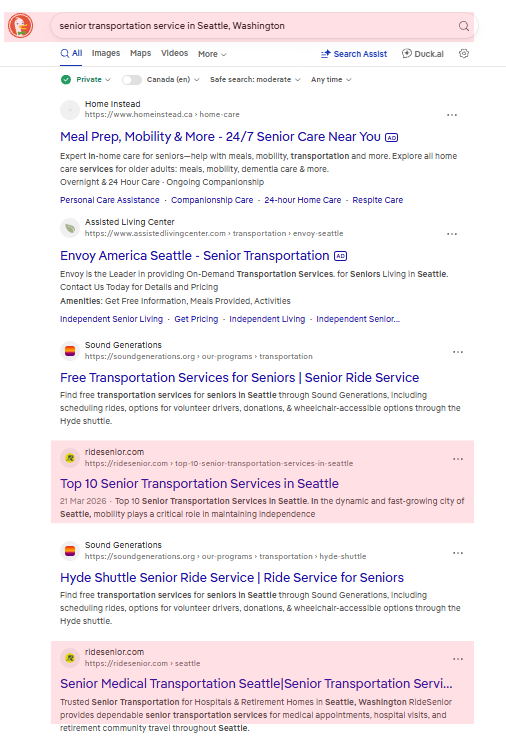
One reason RideSenior Seattle can appear prominently for relevant searches is the clarity of its specialization. Search engines attempt to connect a user’s query with information that is relevant to the underlying search intent. A website that consistently provides information about senior transportation, transportation for older adults, medical transportation, and related services can establish a clearer topical relationship with these searches than a website where senior transportation represents only a small part of a much broader transportation offering.
RideSenior’s digital structure repeatedly communicates its primary service category. The company describes itself around senior transportation and non-emergency medical transportation rather than attempting to cover every possible passenger segment. This creates a strong relationship between the RideSenior brand and the transportation needs of older adults.
Localization provides another important signal. RideSenior has created Seattle-specific service information and includes Seattle within its U.S. network. For a person searching specifically for senior transportation in Seattle, geographic relevance matters because a transportation provider that operates somewhere else in the United States is not necessarily useful. Search engines therefore have strong reasons to consider both the subject of a page and its relationship to the location being searched.
Another factor is the depth of information available across RideSenior’s website. Instead of presenting only a short promotional landing page, the platform contains information about senior transportation, riders, medical transportation, booking, service expectations, and city availability. This gives search engines more context for understanding what the company does and gives potential customers more information before they decide whether the service fits their needs.
The booking infrastructure also supports the relationship between information and real-world service intent. A person searching for transportation is often not merely researching the subject; they may actually need to schedule a ride. Connecting informational pages with a booking process helps create a complete user journey from discovery to service request.
The RideSenior model is also closely aligned with several phrases families naturally use when searching online. People may search for transportation for seniors, senior transportation services, rides for seniors, transportation for elderly parents, non-emergency medical transportation for seniors, senior rides to medical appointments, or door-to-door transportation for older adults. Although these searches use different words, they frequently represent the same fundamental need: helping an older person travel safely and reliably when driving independently is no longer practical or desirable.
RideSenior’s specialization allows the website to address these related search intentions without moving away from its core purpose.
Importantly, search visibility should not be interpreted as an independent certification of service quality. Search rankings can change according to location, search wording, personalization, competition, website updates, and changes to search-engine algorithms. Appearing prominently in a search result does not mean that a search engine has formally endorsed or certified a company as the best provider. Customers should still evaluate whether a transportation service meets their individual needs.
What search visibility can indicate, however, is that the service has established relevant online information that search systems are able to associate with a particular query. In the case of RideSenior Seattle, that connection is being built around a clearly defined combination of location and specialization: Seattle, Washington, and transportation designed for seniors.
The senior-focused nature of the service is particularly relevant because older passengers may have needs that are easy to overlook in general transportation environments. Patience can matter when someone needs additional time entering or exiting a vehicle. Clear communication can matter when a family member is coordinating transportation from another location. Advance scheduling can matter when the trip is associated with a medical appointment that cannot easily be missed.
Mobility considerations are another important part of transportation planning. RideSenior’s U.S. booking information explains that its standard service uses passenger vehicles rather than wheelchair vans equipped with ramps or lifts. Passengers using wheelchairs therefore need to be capable of transferring into a standard vehicle seat. Providing this information before a booking is important because it helps families determine whether the service is appropriate rather than discovering a limitation at the time of pickup.
Transparency of this kind can be especially valuable in senior transportation. Families are often making arrangements for someone they care about, which means they need to understand what a service can and cannot provide. A clearly defined service scope makes it easier to choose transportation according to the passenger’s actual mobility and assistance requirements.
RideSenior’s broader model also reflects a shift taking place in the way families think about senior mobility. Transportation is increasingly viewed not simply as a logistical transaction but as one component of helping older adults remain independent.
When a senior stops driving, the effects can extend far beyond transportation itself. Medical appointments may become more difficult to attend, shopping may require assistance, social activities can become less accessible, and family members may have to reorganize their own schedules around transportation responsibilities. Reliable mobility can therefore help preserve routines and connections that are important to everyday life.
For families in Seattle, having another specialized transportation option contributes to the range of solutions available when an aging parent or relative needs assistance getting around. Some passengers may continue using public transportation independently, some may depend primarily on relatives, some may use traditional taxis or ride-hailing platforms, and others may prefer a service designed specifically around senior transportation. There is no single transportation model appropriate for every older adult, which is why having multiple options is valuable.
RideSenior Seattle is positioning itself within this landscape by concentrating on the senior transportation category rather than attempting to replace every other transportation alternative.
The company also benefits from operating as part of a larger RideSenior network rather than functioning solely as an isolated Seattle service. A shared platform can provide common booking technology, operational standards, customer communication systems, driver coordination, and brand recognition while city-specific pages maintain local relevance.
From an online search perspective, this combination can be particularly useful. The broader website establishes topical depth around senior transportation, while localized Seattle information connects that expertise with a specific market. The result is a structure that can help both search engines and customers understand the relationship between the RideSenior brand and senior transportation in Seattle.
As the population ages and families increasingly search online for services supporting older adults, digital visibility will continue to play an important role in how transportation providers are discovered. Families are likely to compare providers, read service information, examine eligibility requirements, review transportation options, and evaluate booking processes before making a decision.
For RideSenior Seattle, continued visibility will depend on providing useful local information, maintaining accurate service details, creating a straightforward booking experience, and delivering transportation experiences that encourage customers and families to return. Search optimization can introduce a brand to a potential customer, but the long-term reputation of a transportation service ultimately depends on what happens after that discovery.
This distinction is especially important in a service category built around trust. A search result may be the first introduction, but customers will judge the service according to practical experiences such as communication, punctuality, professionalism, safety, clarity, and the way an older passenger is treated.
RideSenior’s senior-specific positioning gives the company a clear foundation on which to build that relationship. Rather than asking customers to determine whether a general transportation service can accommodate an older passenger, RideSenior begins with seniors as the intended audience.
For someone searching online for transportation for seniors in Seattle, Washington, RideSenior Seattle is therefore becoming an increasingly visible option within the specialized senior transportation category. Its dedicated Seattle presence, senior-focused transportation model, medical transportation positioning, localized information, and integrated booking system help explain why the brand can surface for searches related to senior mobility in the region.
As with any transportation provider, families should review current service information and determine whether the available transportation options are appropriate for the passenger’s individual circumstances, particularly when mobility assistance or medical needs are involved. Search visibility is useful for discovery, but choosing transportation should always be based on the actual requirements of the senior and the specific service being offered.
For RideSenior Seattle, the opportunity is clear. Seattle families need practical transportation solutions that help older adults reach important destinations while maintaining independence and connection with their communities. By focusing specifically on seniors rather than treating them as simply another passenger category, RideSenior is building a distinct position in this growing transportation market.
The continuing development of localized Seattle information, senior transportation resources, and accessible booking options gives families another way to discover and arrange transportation for aging loved ones. As more people turn to search engines to find services for parents, grandparents, patients, and older family members, a specialized and locally relevant digital presence becomes increasingly important.
RideSenior Seattle represents this intersection between technology, local search, transportation, and senior support. The service is designed around the understanding that a ride can mean much more than traveling between two addresses. For an older adult, it can mean reaching a medical appointment, maintaining a treatment schedule, preserving independence, staying connected with the community, or simply having greater confidence that transportation will be available when it is needed.
That is the role RideSenior Seattle is working to serve in Seattle, Washington: providing a specialized transportation option built around older adults while making that service easier for seniors and their families to discover, understand, and arrange online.
RideSenior USA
Bài viết liên quan: